Brock Eastman
  • Home
    • Imagination Exploration News
    • eNews Signup
    • Imagination Explorers
    • Rate & Review Challenge
    • Welcome
  • Store
  • Fizzlebop
    • Dr. Fizzlebop
    • Fizzlebop Books
    • Fizzlebop Videos
    • Fizz Extras >
      • Fizzlebop Straw Rocket
    • Fizzlebop Lab Updates
  • Books & Writing
    • Middle Grade & Young Adult Books >
      • Parable Port >
        • Penguincast with J.R.
      • The Quest for Truth >
        • TQ4T Books
        • Questers
        • #TQ4T
        • Glossary
        • Resources & Activities
      • Sages of Darkness >
        • Sage Books
        • Hunters
        • #FightaDemon
      • Kingdoms of Color
      • Crimson Pulse Media
    • Picture & Board Books >
      • Bedtime on Noah's Ark >
        • Bedtime on Noah's Ark
        • Bedtime on Noah's Ark Activities
      • Little Lion Books >
        • Little Lion
        • Daddy's Favorite Sound
        • Mommy's Favorite Smell
        • Little Lion Activities
      • Afraid of the Light
      • Hippopolis >
        • Hippopolis
        • Hippo Activities
      • Saint Nicking at Night
      • Obby the Obot
    • Devotionals & Bibles >
      • Faith and Science with Dr. Fizzlebop
      • Edge of the Galaxy
      • Key Verse Challenge (Go Bible)
      • Go Bible
      • The Action Bible: Faith in Action Edition
    • Early Reader Books >
      • Imagination Station
    • Magazine Stories
  • Author & Speaking
    • Author
    • Speaking
    • Tyndale Summer Camp
    • Adventures in Odyssey
  • Parents & Teachers
    • Activities & Resources
    • Book Lists
    • Book Reviews & Interviews
  • Podcast
Seek Adventure and Truth at Every Turn

Newton's Fizztastic Rocket Experiment

5/24/2025

0 Comments

 
Picture
Introduction:
3...2...1...FIZZ! 🚀 Have you ever wanted to launch your own rocket? Well, today’s experiment will have you blasting off using the power of bubbles and fizz! Real rockets use powerful forces to push them skyward, and we’ll be using a simple chemical reaction to create our own lift-off!
But did you know that in the Bible, we’re also called to launch something? Romans 1:16 (NLT) says, “For I am not ashamed of this Good News about Christ. It is the power of God at work, saving everyone who believes.” Just like our rocket needs power to launch, God’s message of love and salvation has the power to change lives! Let’s get ready for some fizztastic learning!
Now, let’s gather our supplies!
Safety Warning: High pressure projectile. Anyone watching the launch should stand clear. Anyone observing the experiment should wear safety glasses.
Fizzlebop Supply List:
  • 1 empty 16.9 oz (500 ml) plastic bottle
  • 1 cork (fits snugly in the bottle’s opening)
  • 1 small square of paper towel
  • 1 tablespoon (14 g) baking soda
  • 4 oz (118 ml) vinegar
  • 3 straws
  • Packing tape
  • Safety goggles
The Experiment:
  1. Tape one end of the straws to the lower section of the outside of the bottle to create three legs. These will keep the bottle opening suspended upside-down in the air.
  2. Flip the bottle right-side up and pour in 4 oz (118 ml) of vinegar.
  3. Scoop the baking soda onto the paper towel and fold it into a small packet. This slows down the reaction, giving us time to set up the rocket.
  4. Take the rocket and baking soda package outside to a solid launchpad, like a driveway or sidewalk. 
Fizz Tip: Check your surroundings and make sure nothing breakable is nearby! 
Safety Warning: Anyone watching the launch should stand clear.
  1. While wearing safety goggles, drop the baking soda packet into the bottle and quickly seal it with the cork.
  2. Stand the bottle upside-down on the straws and move back quickly.
  3. Watch as your rocket takes off!
Dr. Fizzlebop, What’s Happening? Did you see the fizz? The baking soda and vinegar created a gas called carbon dioxide. This gas built up pressure inside the sealed bottle. When the pressure became too great, it forced the cork out, causing the bottle to launch into the air! This is Newton’s Third Law of Motion in action: every action has an equal and opposite reaction. The gas shot downward, and the rocket launched upward with force!
Devotional:
Wow, that was fizztastic! Your rocket launched because of the powerful reaction inside the bottle. Without that power, it would have just sat there, going nowhere.
In the same way, our faith is powerful when we share it! God’s truth isn’t meant to be hidden—it’s meant to go out and reach others. Romans 1:16 reminds us that the Gospel is God’s power to save people. When we’re excited about Jesus, we can boldly share His love with others—just like that rocket bursting into the sky!
Sometimes, we might feel nervous or unsure about sharing our faith. What if people don’t listen? What if we don’t have all the answers? But here’s the fizztastic truth—just like our rocket had everything it needed to launch, God gives us everything we need to share His love!
So, the next time you feel shy about talking about Jesus, remember this experiment! God’s power is behind you, giving you the boldness to share His Good News with the world! 🌎🚀
Collecting Your Family’s Data:
  • 🚀 How high did your rocket go?
  • ⏳ How long did it take for the pressure to build up and launch?
  • 🔍 What happens when you change the amount of baking soda or vinegar?
  • 💡 How does this experiment remind you of the power of the Gospel?
Prayer Time:
Dear God, Thank You for giving us the powerful Good News of Jesus! Just like our rocket launched into the sky, help us boldly share Your love with others. Give us courage when we feel shy and remind us that You are always with us. Thank You for filling us with Your power to tell others about You. We love You! Amen.
Ready for More Fizztastic Fun? Keep the learning (and fizzing) going! Check out Faith and Science with Dr. Fizzlebop for more amazing experiments that connect faith and science in fun and fizztastic ways! 🚀✨

0 Comments

Color-Changing Flower Fun! May Day Experiment

5/5/2025

0 Comments

 
Fizzlebop Supply List:
🌸 White flowers (carnations, daisies, or roses)
💧 Glasses or jars filled with water
🎨 Food coloring (any color you like!)
✂️ Scissors


The Experiment:
1️⃣ Trim the stems of your white flowers.
2️⃣ Fill each glass with water and a few drops of food coloring (the more drops, the stronger the color!).
3️⃣ Place a flower in each glass and observe over the next few hours!
4️⃣ Watch as the petals slowly change color! 🌈


“Dr. Fizzlebop, What’s Happening?”
Plants drink water through their stems, pulling it up like a straw! The colored water travels to the petals, showing how plants absorb nutrients. It’s just like how we soak up God’s love and share it with the world! ❤️

Devotional:
📖 May Day & Our Faith 🌿Just like flowers grow and bloom, God wants us to grow in our faith and spread His love. Colossians 2:7 (NLT) says,
"Let your roots grow down into Him, and let your lives be built on Him. Then your faith will grow strong in the truth you were taught, and you will overflow with thankfulness."

As we celebrate May Day and the beauty of God’s creation, let’s remember to share kindness, encouragement, and God’s love with those around us—just like spreading sunshine on a spring day! 🌞

Collecting Your Family’s Data:
🔍 What colors did your flowers turn?
🌿 How long did it take for the petals to change?
🧐 What do you think would happen if you mixed two food coloring colors together?


Prayer Time:
Dear God,
Thank You for the beauty of spring and the reminder that You make all things new! Help us grow strong in our faith, just like the flowers You created. May we spread Your love to others and bring joy wherever we go. Thank You for Your goodness!
Amen. 🌼✨


​
0 Comments

Easter Experiment: Eggshell Geodes - Making Something Beautiful from Brokenness

4/20/2025

0 Comments

 
Introduction:
Welcome to the lab! We’ve got an eggcellent eggsperiment today. Did I say “eggcellent eggsperiment”? I meant excellent experiment! I’ve got eggs on my mind because today we are going to be using those intriguing white ovoids.
Eggs are quite fragile, and you probably know that it’s essential to be careful when handling them. In this experiment, however, we will be breaking a few shells and then taking what is broken and making something beautiful: eggshell geodes! Geodes are rocks with colorful minerals inside. These neato rocks are not only colorful but unique in how they develop. Let’s get cracking!

Safety Warning: 
This experiment requires boiling water. Have an adult do this experiment with you. Safety first!

Fizzlebop Supply List:
🧪 A saucepan
💧 2 cups (480 mL) water
🥚 Eggs (one for each geode you plan to make)
🔥 Hot water
📦 An empty egg carton
🥄 A spoon
📏 A heatproof measuring container
🧂 2 cups (500g) sea salt or sugar
🎨 Food coloring (your favorite colors!)


The Experiment:
1️⃣ Boil the Water: Heat 2 cups (480 mL) of water in a saucepan.
2️⃣ Crack the Eggs: Carefully crack eggs as close to the narrow end as possible. The more eggshell we have, the larger our geode will be. Fizz Tip: Save the yolks and whites for some delicious scrambled eggs! 🍳
3️⃣ Clean the Shells: Remove the membrane lining inside the shell using warm water and your fingers. Be gentle to avoid breaking the shell further.
4️⃣ Set Up the Shells: Place the cleaned shells in the egg carton with the open side facing up.
5️⃣ Dissolve the Solid: Carefully pour the boiling water into a heatproof measuring container. Add ½ cup (125g) of salt or sugar to the hot water and stir until dissolved.
6️⃣ Create a Saturated Solution: Keep adding small amounts of the solid until no more dissolves. This is called saturation.
7️⃣ Add Some Color: Stir in your food coloring. If making multiple colors, divide the solution into separate containers first.
8️⃣ Fill the Eggshells: Pour the colored solution into the eggshells, filling them as much as possible without overflowing.
9️⃣ Wait and Observe: Find a safe place for your geodes to sit undisturbed. Over the next few days, the water will evaporate, leaving behind beautiful crystals!


Dr. Fizzlebop, What’s Happening?
As the days pass, the water in the solution evaporates into the air. Since salt and sugar cannot evaporate, they are left behind, forming dazzling crystals on the eggshell walls! This mimics how real geodes form in nature when minerals slowly build up inside hollow rocks. Wasn’t that egg-citing?

Collecting Your Family’s Data:
🔍 Analyze and describe your eggshell geodes. What do you see (color, texture, shapes)?
⏳ How long did it take for the crystals to form?
💡 How does this experiment remind you of taking something broken and making it beautiful?


Devotional Thought:
Beauty from Brokenness
Just like we took broken eggshells and turned them into something beautiful, God does the same with our lives! Sometimes, we go through tough situations that make us feel broken. But in Isaiah 61:3 (NLT), God promises to give us "a crown of beauty for ashes, a joyous blessing instead of mourning."

When things don’t go as planned, we can trust that God is at work, turning our brokenness into something even more beautiful than before. Just like these eggshell geodes, He can transform our hearts and bring His light into our lives!

Prayer Time:
Dear God,
Thank You for showing us how You create beauty from brokenness. Help us to trust You when things don’t go the way we expect. Just like our eggshell geodes, remind us that You are always working to make something wonderful out of every situation. We love You! Amen. 🙏


Share Your Geodes!
We’d love to see your egg-citing results! Post your pictures online and tag us @Fizzleboplabs with #Fizzlebop so we can celebrate your fizztastic geodes together! 🎉🥚💎

​Ready for more experiments that combine
faith and science? Check out Faith and Science with Dr. Fizzlebop for more fizztastic fun!
0 Comments

A Guide to the Different Types of Weather Around the World

3/19/2025

1 Comment

 
Weather is one of the most dynamic and ever-changing aspects of life on Earth. It dictates how we dress, how we travel, and even how we grow food. Across the globe, different regions experience unique weather patterns, from scorching heatwaves to icy blizzards. In this post, we’ll explore the major types of weather, what they’re called, and some fascinating facts about each one.

1. Sunny (Clear) Weather ☀️What It Is: A day dominated by sunshine with little to no cloud cover.
Where It Happens: Common in deserts (Sahara, Mojave) and tropical islands.
Key Facts:
  • Caused by high-pressure systems that push clouds away.
  • Too much sun exposure can lead to heat exhaustion or sunburn.
  • Essential for solar power generation.

2. Rainy Weather ☔What It Is: When water droplets fall from clouds to the Earth’s surface.
Where It Happens: Common in tropical rainforests (Amazon, Congo) and coastal regions.
Key Facts:
  • The wettest place on Earth is Mawsynram, India, with over 467 inches of rain annually.
  • Rain is crucial for agriculture but can cause floods when excessive.
  • Monsoons bring seasonal heavy rains to South and Southeast Asia.

3. Thunderstorms & Lightning ⛈️What It Is: A storm characterized by rain, thunder, and lightning.
Where It Happens: Common in tropical and temperate regions, especially the U.S. Midwest.
Key Facts:
  • Thunder is the sound of rapidly expanding air around a lightning bolt.
  • The Empire State Building is struck by lightning about 20-25 times a year.
  • Severe thunderstorms can produce hail, tornadoes, and flash floods.

4. Snowy Weather ❄️What It Is: Frozen precipitation falling from clouds, often forming snowflakes.
Where It Happens: Polar regions (Antarctica, Arctic) and high-altitude areas (Rocky Mountains, Alps).
Key Facts:
  • Snowflakes have six symmetrical sides due to ice crystal formation.
  • The largest recorded snowfall in 24 hours was 75.8 inches in Colorado (1921).
  • Snow helps regulate the Earth’s temperature by reflecting sunlight.

5. Windy Weather 🌬️What It Is: The movement of air caused by differences in atmospheric pressure.
Where It Happens: Coastal regions, open plains, and mountain passes.
Key Facts:
  • The strongest wind gust recorded was 253 mph during Cyclone Olivia (1996).
  • Wind turbines harness wind power for renewable energy.
  • The jet stream, a high-altitude wind current, influences global weather patterns.

6. Foggy Weather 🌫️What It Is: A dense layer of cloud near the ground, reducing visibility.
Where It Happens: Common in coastal areas (San Francisco), valleys, and lakes.
Key Facts:
  • Fog forms when warm, moist air cools rapidly.
  • It can make travel hazardous by reducing visibility.
  • Some places, like Newfoundland, Canada, experience fog over 200 days a year.

7. Humid & Tropical Weather 🌴What It Is: High moisture content in the air, making the environment feel hotter.
Where It Happens: Rainforests, coastal areas, and equatorial regions (Amazon, Southeast Asia).
Key Facts:
  • High humidity slows down the body's ability to cool itself through sweating.
  • Humid conditions contribute to heavy rainfall and lush vegetation.
  • It can lead to hurricanes and typhoons in certain regions.

8. Dry (Arid) Weather 🌵What It Is: Extremely low humidity with little to no rainfall.
Where It Happens: Deserts (Sahara, Gobi, Atacama).
Key Facts:
  • The Atacama Desert in Chile is the driest place on Earth.
  • Deserts experience extreme temperature changes between day and night.
  • Plants like cacti have adapted to survive in arid environments.

9. Tornadoes 🌪️What It Is: A rotating column of air extending from a thunderstorm to the ground.
Where It Happens: Common in the U.S. Midwest ("Tornado Alley") and parts of Bangladesh and Argentina.
Key Facts:
  • Tornadoes are ranked using the Enhanced Fujita (EF) scale, from EF0 to EF5.
  • The widest tornado recorded was 2.6 miles across (El Reno, Oklahoma, 2013).
  • Some tornadoes have wind speeds exceeding 200 mph.

10. Hurricanes, Typhoons, & Cyclones 🌀What It Is: A large, powerful storm system with strong winds and heavy rain.
Where It Happens:
  • Hurricanes – Atlantic Ocean (Caribbean, U.S. East Coast).
  • Typhoons – Western Pacific (Japan, Philippines).
  • Cyclones – Indian Ocean (India, Australia).
    Key Facts:
  • The Saffir-Simpson Scale ranks them from Category 1 to 5.
  • The deadliest recorded tropical cyclone was the 1970 Bhola Cyclone, killing over 300,000 people in Bangladesh.
  • Hurricanes gain strength over warm ocean waters but weaken over land.

11. Hailstorms & Ice Storms 🧊What It Is: Frozen precipitation that falls as ice pellets or coats surfaces in ice.
Where It Happens: Occurs in temperate regions prone to severe thunderstorms.
Key Facts:
  • The largest recorded hailstone was 8 inches in diameter (South Dakota, 2010).
  • Ice storms cover trees, power lines, and roads with a thick layer of ice, making travel dangerous.
  • Hail can cause severe damage to crops, vehicles, and buildings.

Conclusion: Weather’s Impact on Our WorldWeather is more than just a daily forecast—it shapes our planet, communities, and way of life. Whether you’re basking in the sun, navigating through a snowstorm, or witnessing a powerful thunderstorm, each weather type tells a story about our planet’s complex and ever-changing atmosphere.
What’s the most extreme weather you’ve ever experienced? Share your story in the comments!
1 Comment

National STEM Week: Sparking Curiosity & Faith in Science!

3/14/2025

0 Comments

 
Picture
Get ready to experiment, explore, and engage because it’s National STEM Week—a time to celebrate the wonders of science, technology, engineering, and math! But wait—have you heard about STEAM? That’s right! There’s art in the mix now, too! Let’s dive into why STEM (or STEAM!) is so important and how Faith and Science with Dr. Fizzlebop makes it easy (and super fun!) for families to explore faith and science together.

What is STEM… and Why Does It Matter?
STEM stands for Science, Technology, Engineering, and Math—four subjects that shape the world around us! From the smartphones in our hands to the bridges we drive across, STEM fields are the building blocks of innovation. Encouraging kids to explore STEM helps them develop critical thinking, creativity, and problem-solving skills—all things they’ll need for exciting careers in the future. 🚀
But there’s been a recent addition to the STEM movement--Art! When you add Art into STEM, you get STEAM! 🎨 Why? Because creativity fuels innovation! Whether it’s designing futuristic technology, building awe-inspiring architecture, or creating dazzling science experiments, art and creativity play a huge role in making science even more fizztastic!

Faith + Science = A Winning Combination!
At Fizzlebop Labs, we believe that faith and science go hand in hand! After all, God is the ultimate Creator, and exploring His world is one of the most exciting ways to grow in knowledge and faith. That’s why Faith and Science with Dr. Fizzlebop is packed with super simple, hands-on experiments that help families connect science with biblical truths.

STEAM learning isn’t just about textbooks and tests—it’s about curiosity, creativity, and hands-on discovery. And with Dr. Fizzlebop’s fizztastic experiments, families can have a blast while growing in faith and unlocking the wonders of science together.

Celebrate National STEM Week with a Fizz!
This National STEM Week, let’s ignite curiosity, explore God’s creation, and make learning an adventure! Whether you’re mixing up some bubbly chemical reactions, building gravity-defying structures, or learning how light and reflection work, there’s so much to discover—and Faith and Science with Dr. Fizzlebop is here to make it faith-filled and fun!

🎉 Ready to dive into STEAM with a faith-filled twist? Check out Faith and Science with Dr. Fizzlebop and start exploring today! 🚀🔬✨
Picture

Faith and Science with Dr. Fizzlebop: 52 Fizztastically Fun Experiments and Devotions for Families

$15.99 $10.00
Add to Cart

On Sale

On Sale

Celebrate Earth Day - Make a Mini Ecosystem in a Jar! - Fizzlebop

$1.99 $0.00

🌍 Create Your Own Ecosystem in a Jar! 🌱✨


Celebrate Earth Day with this hands-on experiment that brings nature to life! Build a self-sustaining mini-ecosystem using soil, plants, water, and small critters inside a sealed jar. Watch as the water cycle, oxygen exchange, and decomposition work together—just like in God’s amazing creation! This fun and educational activity teaches kids about stewardship, biodiversity, and how ecosystems thrive. Perfect for curious minds who love science and nature! 🌿🔬🐜


Want to explore more faith-filled science fun? Check out Faith and Science with Dr. Fizzlebop! 🚀

Shop

On Sale

On Sale

Newton's Fizztastic Rocket - Fizzlebop

$1.99 $0.00

Blast off with Newton’s Fizztastic Rocket! 🚀


Get ready for an explosive adventure as you build and launch your own rocket using a simple chemical reaction! This hands-on experiment demonstrates Newton’s Third Law of Motion—every action has an equal and opposite reaction—while teaching kids about the powerful message of the Gospel. Just like our rocket needs force to launch, God gives us the power to boldly share His love. Perfect for young scientists and future astronauts, this fizztastic experiment combines faith and STEM for an unforgettable learning experience! 🚀✨


Want to explore more faith-filled science fun? Check out Faith and Science with Dr. Fizzlebop! 🚀

Shop

On Sale

On Sale

The Pi-Finder Experiment (Fizzlebop)

$1.99 $0.00

Pi Finder Experiment: Discover the Magic of Pi!


Celebrate Pi Day with a hands-on experiment that brings math to life! The Pi Finder Experiment uses simple materials to reveal the famous number π (pi) in a fun and interactive way. By rolling a circular object and measuring its circumference and diameter, kids will uncover the amazing mathematical constant that appears all around us!


Perfect for young scientists and curious minds, this experiment blends STEAM learning with real-world discovery—making Pi Day unforgettable! 🥧✨

Shop
0 Comments

The Pi-Finder Experiment

3/14/2025

0 Comments

 
Picture
The Pi-Finder Experiment
Discover Pi for yourself using just a string and a circular object!
Fizzlebop Supply List:
  • A round object (plate, lid, can, frisbee, etc.)
  • A flexible measuring tape or a piece of string
  • A ruler
  • A calculator
The Experiment:
  1. Measure the Circumference – Wrap the string around the widest part of the circle (its circumference). Mark the spot where the string meets itself.
  2. Measure the Diameter – Stretch the string across the middle of the circle from one side to the other. Mark the length of the diameter.
  3. Do Some Fizztastic Math! – Use the formula for Pi: π=CircumferenceDiameter\pi = \frac{\text{Circumference}}{\text{Diameter}}π=DiameterCircumference​ Divide your circumference measurement by the diameter. You should get close to 3.14—the magical number Pi!
Fizz Fact about Pi!Pi is an irrational number, meaning it goes on forever without repeating. Scientists have calculated over 62 trillion digits of Pi, but for most experiments, 3.14 is just fine!
Bonus Challenge!Try measuring different circular objects and see if Pi is always the same! (Hint: It is! 😆)
This is a Fizz-tastic way to celebrate Pi Day while connecting math with real-world experiments! Want more faith and science fun? Check out Faith and Science with Dr. Fizzlebop for more STEAM-filled adventures! 🚀🔬

Have a FIZZTASTIC time,
Dr. Fizzlebop

​
Picture
0 Comments

Phases of the Moon

9/13/2023

0 Comments


Introduction

Have you ever wondered why the moon seems so bright at night? Did you know that the moon doesn’t create its own light? Instead, it reflects the light of the sun. The moon looks different depending on its position and the location of the sun. That’s how we have different phases of the moon. Astronomers (who are scientists that study everything in the universe beyond Earth’s atmosphere) even have names for when the moon looks different, including supermoon, blood moon, blue moon, harvest moon, and more. Have you ever seen one of these special moon phases?

​Today we’re going to check out the basic phases of the moon with a yummy methodology (which means process.)

Fizzlebop Supply List

  • Package of Oreos
  • Spoon
  • Oreo Cookie Moon Phase Guide (below)

The Experiment

1. Carefully and slowly twist the two sections of Oreo in opposite directions. This will increase the amount of frosting on one side. Now pull the two sides apart. 


FIZZ TIP: If your frosting sticks to both sides, you’ll need to eat the cookie and try again. 

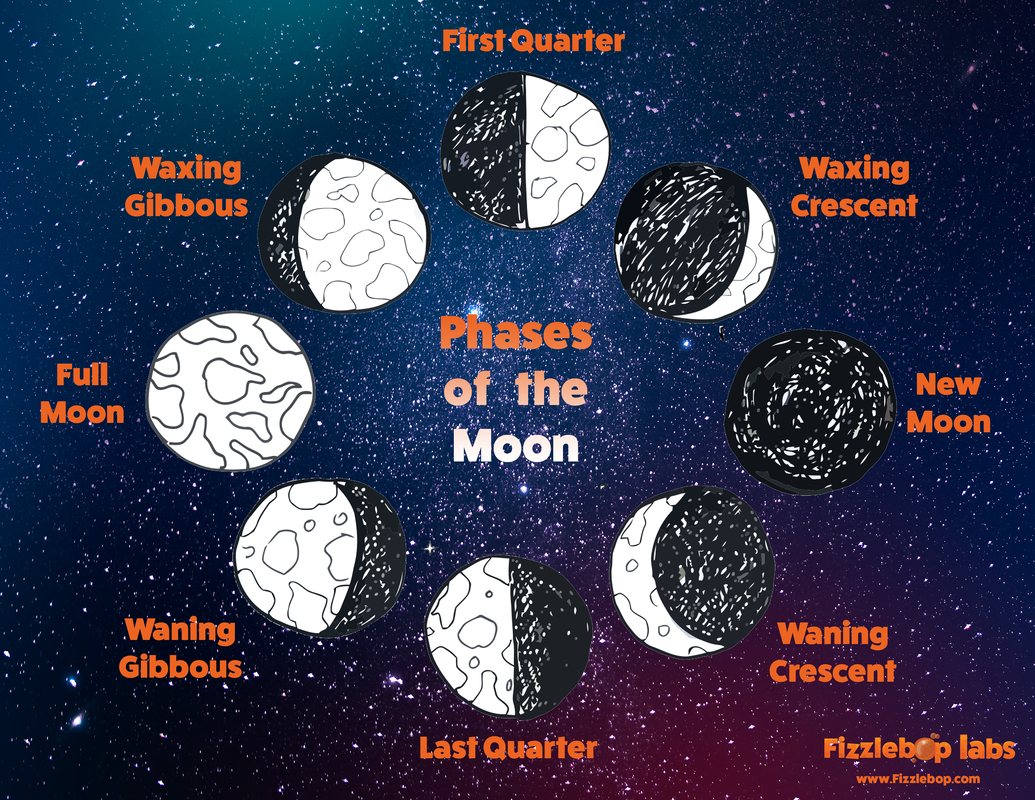
2. Once you have a majority of frosting on one side of the Oreo, use the spoon to scoop away frosting according to the Oreo Cookie Moon Phase Guide. 


3. Now  arrange the cookies in the order of the Oreo Cookie Moon Phase Guide and observe.


FIZZ TIP:
If it’s nighttime, look outside and see what phase the moon is in right now.


​4. Finally, eat your moon phases and enjoy! Fizzilicious! 

Fizz Facts

Did you know the moon moves about 3.8 cm (almost 1.5 in.) away from the Earth each year? As of early 2023, only twelve humans have walked on the moon, but that’s likely to change in the coming years. Maybe you’ll be one of those humans. If you are, you’ll feel a lot lighter since the moon’s gravity is only 1/6th of the Earth’s gravity. If you do go, be sure to take your copy of Faith and Science with Dr. Fizzlebop with you.

Collecting Your Family’s Data

What phase is the moon currently in? 
Which Oreo cookie moon phase tasted best?

Oreo Moon Phase Chart
Download
Picture
0 Comments

George Washington Carver: Faithfully Using Science to Help Others (Part 2)

2/23/2022

0 Comments

 
Picture
Welcome back! Last week we began the story of George Washington Carver and paused just after he received the Master’s Degree he had worked so long to earn.

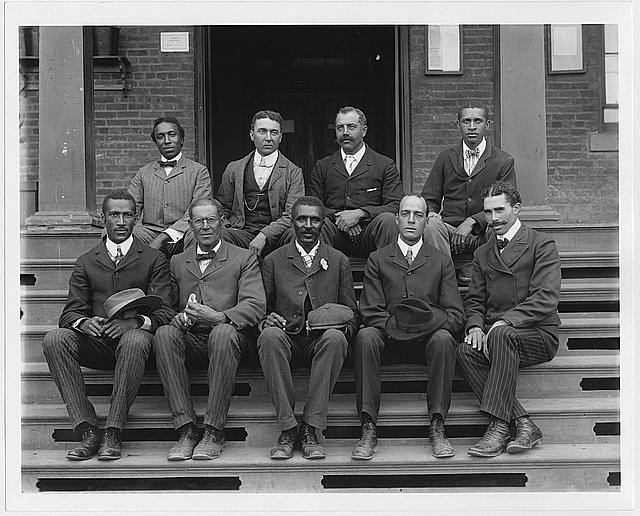
The same year that George earned his degree, Booker T. Washington invited George to move to Alabama to join the faculty of Tuskegee Institute as director of the school’s new agriculture department. Booker, an important African American leader, wanted Tuskegee Institute to teach African Americans practical skills to better themselves as well as achieve better-paying work and eventually, through patience and cooperation, raise their people above the social and political injustices they were currently facing. George, having seen the effectiveness of that approach in his own life, agreed with Booker’s goals and likewise agreed on April 12, 1896, to take the job Booker offered him. George wrote to Booker, “[I]t has always been the one great ideal of my life to be of the greatest good to the greatest number of 'my people' possible and to this end I have been preparing myself these many years; feeling as I do that this line of education is the key to unlock the golden door of freedom to our people.” 

George’s desire to help others stemmed from his childhood faith. As a boy, George had visited a church near the Carver farm. Then when George lived with the Watkins, Mariah passed her faith on to George along with her knowledge of herbs. George’s year at the Methodist Simpson College continued to develop his faith. Their acceptance of him regardless of his skin color had a marvelous influence. Years after his time there, he recalled, “They made me believe I was a real human being." George’s faith provided another motivation for his transfer to Iowa State Agricultural School; he wanted to develop the scientific abilities God had given him in order to help his people in the best way he could. After attending Iowa State, he spent the rest of his life serving at Tuskegee Institute. ​
Picture
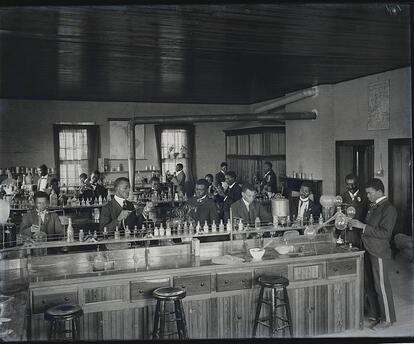
George’s service to students extended far beyond lecturing in his classroom. His ecstatic, exuberant, and entertaining lectures on the magnificence and usefulness of the natural world did indeed cause Booker to observe, “There are few people anywhere who have greater ability to inspire and instruct as a teacher…." But George didn’t just teach about science. On Sunday nights for thirty years he led a Bible class. He also spoke at organizations trying to bring unity to a nation divided by the color of people’s skin. As George’s popularity spread through Tuskegee and beyond, young men, both black and white, came to him to learn how to deal with the difficulties and divisiveness of the world. George sympathized with their problems and pointed them toward faith in a good Creator and ultimate justice. He mentored them, knowing that these young men would shape the future of America. To one of his beloved boys, George wrote: "Not a day passes that I do not think of my boys and often wonder just what they are doing…. It is such an inspiration to me to watch the progress that you and your brother have, and are yet, making, and the future that will doubtless be yours as young aspiring American citizens who must figure into the building up of this great American commonwealth…."
Picture
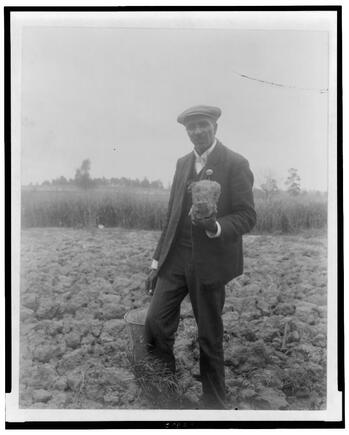
George served many people through his scientific research, too. George saw farmers struggling harder and harder to make their fields grow enough cotton to sell to support themselves. Trying to understand the problem, George used chemistry to examine the dirt. He realized that growing so much cotton for so long in the same fields had used up the nutrients in the dirt. George’s next step was to find an inexpensive, easy solution to the problem that poor farmers without many resources could use. George experimented with rotating crops and demonstrated that temporarily growing peanuts or sweet potatoes instead of cotton would refresh the soil’s nitrogen content and create a better cotton crop the next time cotton was planted in that field. This was a marvelous first step toward a solution, but farmers next needed to be able to use and sell all the peanuts and sweet potatoes they grew. So George went back to experimenting. Tuskegee records that George worked on over 100 different ways to use sweet potatoes (click here for a partial list) and 300 different ways to use peanuts for food, medicine, cosmetics, dyes, and many other needs (some listed here).  

George also knew he needed to figure out ways to share his research with the farmers and to convince them to try his ideas since not everyone could or would travel to see his work in person. So George took Booker’s idea of a “traveling agricultural school” and invented the Jessup wagon to bring demonstrations of his research directly to farmers in their own fields and communities, letting farmers see the stupendous results for themselves. George spread his research through writing, too; despite a lack of funds and help, George published forty-four bulletins (a sort of information pamphlet) with titles like, “How to Grow the Peanut & 105 Ways of Preparing it for Human Consumption,” and “Possibilities of the Sweet Potato in Macon Co.” (Tuskegee maintains
a full list of George’s bulletins here.)

Read "The canning and preserving of fruits and vegtables in the home" by George Washington Cover @ the button below.

Read the Book
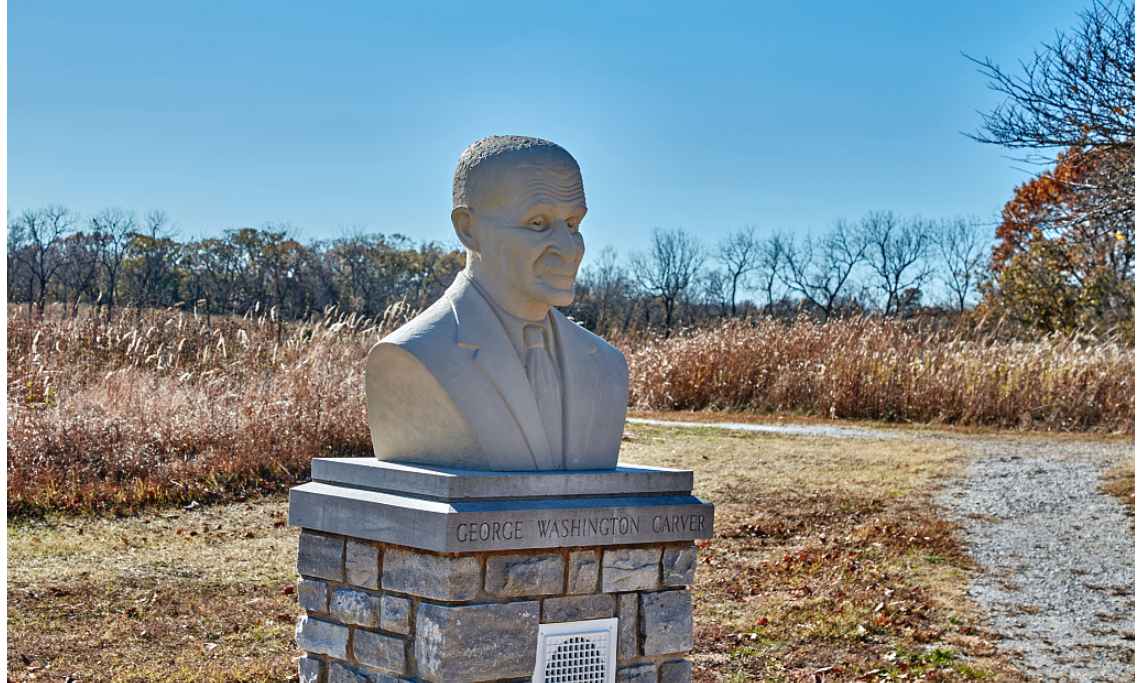
George’s work succeeded and his fame grew. In 1921, George’s presentation on the usefulness of peanuts before the U.S. House of Representatives’ Ways and Means Committee won government protection for the peanut industry and the title “The Peanut Man” for himself. His first college, Simpson College, awarded him an honorary Doctor of Science degree in 1928. At the beginning of George’s career at Tuskegee, virtually no one was growing and selling peanuts. Fifty years later, peanuts were in the United State’s top six major crops. By 1940, the growing and selling of peanuts were second only to cotton in the South. George’s influence reached U.S. national figures like Henry Ford and Presidents Calvin Coolidge and Franklin Roosevelt and extended beyond the Atlantic Ocean; leaders of other nations asked for his advice to help their people. He was even selected to join Britain’s Society for the Encouragement of Arts, Manufactures, and Commerce. After George passed away on January 5, 1943, President Franklin Roosevelt established a monument in George’s honor near his birthplace in Diamond, Missouri. To this very day, the Missouri Department of Agriculture states on their website, “Dr. Carver and the peanut helped save the economy of the southern part of the U.S.”
Picture
George Washington Carver’s success could be measured in many ways, but to George, only one way mattered. As George himself said, “It is not the style of clothes one wears, neither the kind of automobiles one drives, nor the amount of money one has in the bank that counts. These mean nothing. It is simple service that measures success." George’s faith inspired him to use all of his abilities, especially his scientific ones, to bring help and harmony to people. Tuskegee offers the following tribute to the way he combined faith and science:
    
“Dr. Carver’s practical and benevolent approach to science was based on a profound religious faith to which he attributed all his accomplishments. He always believed that faith and inquiry were not only compatible paths to knowledge, but that their interaction was essential if truth in all its manifold complexity was to be approximated. 

“Always modest about his success, he saw himself as a vehicle through which nature, God and the natural bounty of the land could be better understood and appreciated for the good of all people.

“Dr. Carver took a holistic approach to knowledge, which embraced faith and inquiry in a unified quest for truth. Carver also believed that commitment to a Larger Reality is necessary if science and technology are to serve human needs rather than the egos of the powerful. His belief in service was a direct outgrowth and expression of his wedding of inquiry and commitment.”

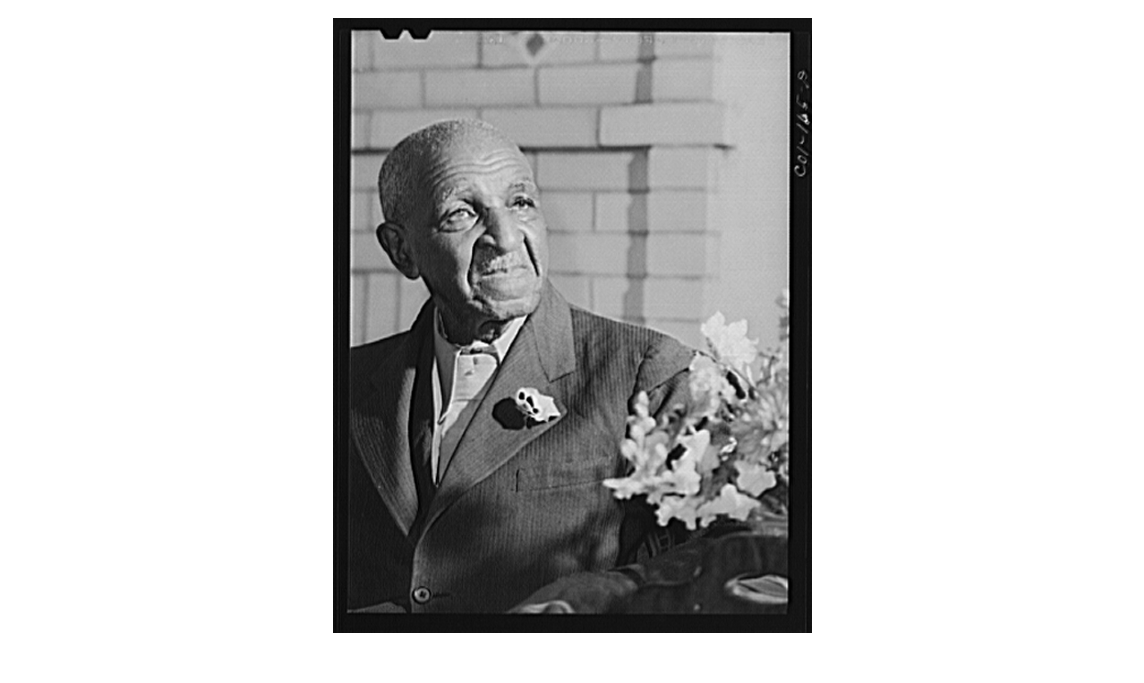
President Franklin Roosevelt wrote about George, “All mankind are the beneficiaries of his discoveries in the field of agricultural chemistry. The things which he achieved in the face of early handicaps will for all time afford an inspiring example to youth everywhere." The words on George’s gravestone sum up his life well: “He could have added fortune to fame, but caring for neither, he found happiness and honor in being helpful to the world.” Today, let’s follow this marvelous man’s example and never give up learning more about the unique interests God has given to each of us and developing our skills to serve the people around us.
Picture
Sources:
  • George Washington Carver: Chemist, Teacher, Symbol; American Chemical Society National Historic Chemical Landmarks
  • George Washington Carver Biography; Biography.com
  • George Washington Carver; Encyclopedia Britannica
  • A Great Teacher; George Washington Carver Museum Management Program, National Park Service
  • George Washington Carver; History.com
  • George Washington Carver; Missouri Department of Agriculture
  • George Washington Carver; Science History Institute 
  • The Legacy of Dr. George Washington Carver; Tuskegee University
  • George Washington Carver Chronology; Tuskegee University

0 Comments

George Washington Carver: Faithfully Using Science to Help Others (Part 1)

2/16/2022

0 Comments

 
Picture
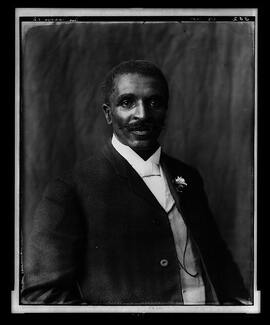
Greetings! Today I want to share the first part of a story with you about a stupendous man whose faith led him to marvelous scientific accomplishments that helped many people. Perhaps you’ve heard of him—he’s sometimes referred to as “The Peanut Man.” But long before he earned that title, he was known as “Carver’s George.” You see, George Washington Carver, the famous scientist who used chemistry and agriculture (the study of farming) to improve the lives and work of many poor Southern farmers, began life as a slave.

George was born, according to his own record, “in Diamond Grove, Missouri, about the close of the great Civil War, in a little one-roomed log shanty, on the home of Mr. Moses Carver…the owner of my mother….” While he was still just a baby, men attacked the Carver farm and captured George, his mother Mary, and his sister in order to sell them in another state. All of Moses Carver’s efforts only recovered baby George. Without any parents to care for him, Moses and Susan Carver raised George themselves, even after the government legally freed all slaves in 1865. 

Picture
Since George’s poor health wouldn’t allow him to do much physical work, Susan taught him other skills in addition to reading and writing, like cooking, sewing, gardening, and creating home remedies from herbs. George loved learning and found plants especially fascinating. He studied the plants around him and experimented with ways to help them grow better. He became so good at it that neighboring farmers nicknamed him “the plant doctor.” 

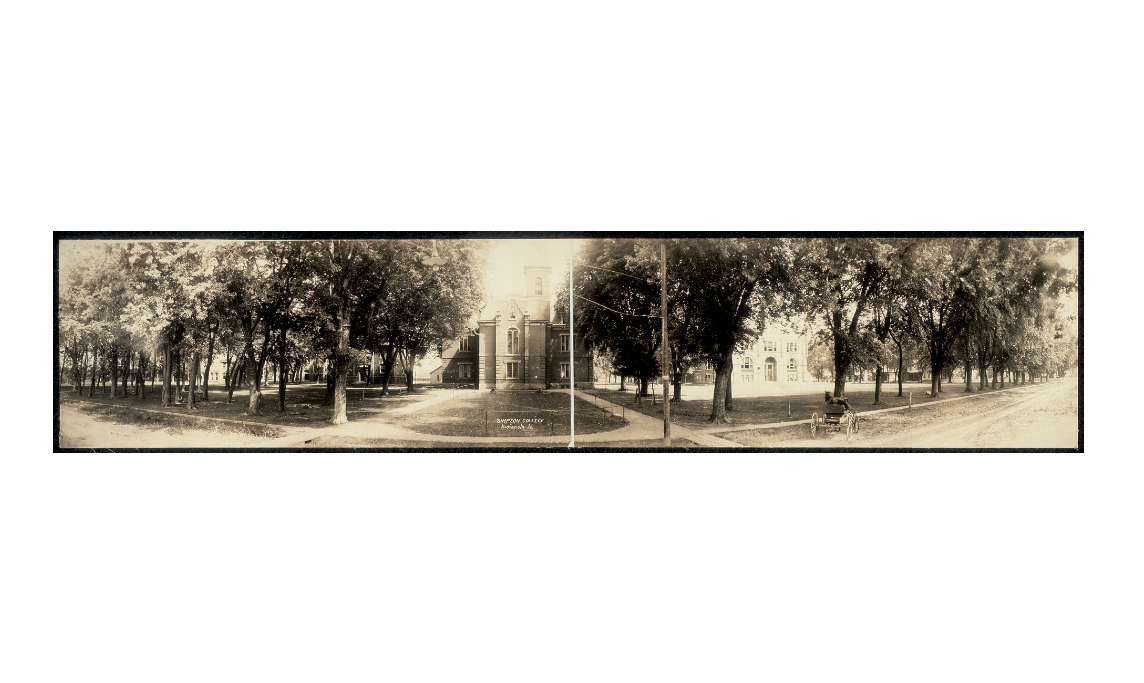
But George knew there was more to learn beyond the Carver farm. Sometime around age eleven or twelve, George went to live with an African American couple named Andrew and Mariah Watkins so he could study at a one-room school for African Americans. Mariah supplemented his school studies with further training in using herbs to help heal people. George soon learned all he could there and spent the next years of his life moving from town-to-town, working a variety of jobs (including cooking, housework, laundry, and farming) as he tried different schools. He never lost his interest in nature and developed an ability to draw the plants and animals he studied. Finally, in 1880, he completed his high school education in Minneapolis, Kansas.
Picture
Even after going to all that effort just to graduate high school, George was still determined to learn more. At first, Kansas’s Highland College accepted his application to enroll in their school. Then, exasperatingly and unfairly, once George arrived and college officials saw the color of his skin, they turned him away. George returned to studying and experimenting on his own. Finally, some white friends, the Milhollands, pushed George to give college another try, and in 1890, Simpson College welcomed him. George started his college career focused on the arts until one of his professors, Etta Budd, persuaded him to pursue botany at Iowa State Agricultural School. George graduated with a Bachelor of Science Degree in 1894, something no other African American had achieved before him. At his professors’ request, George continued his education and graduated with his Master of Agriculture Degree in 1896. He was well on his way to living out the words of what became his favorite poem, “Equipment,” by Edgar A. Guest: 

Figure it out for yourself, my lad,
You've all that the greatest of men have had,
Two arms, two hands, two legs, two eyes
And a brain to use if you would be wise.
With this equipment they all began,
So start for the top and say, “I can.”

Read the rest of the poem here! Next week I’ll be sharing about all the marvelous ways that George helped improve the lives of many people by using the hard-earned knowledge he had equipped himself with! ​
Sources:
  • ​George Washington Carver: Chemist, Teacher, Symbol; American Chemical Society National Historic Chemical Landmarks
  • George Washington Carver Biography; Biography.com
  • George Washington Carver; Encyclopedia Britannica
  • A Great Teacher; George Washington Carver Museum Management Program, National Park Service
  • George Washington Carver; History.com
  • George Washington Carver; Missouri Department of Agriculture
  • George Washington Carver; Science History Institute 
  • The Legacy of Dr. George Washington Carver; Tuskegee University
  • George Washington Carver Chronology; Tuskegee University

​
0 Comments

Fizzing Hearts (Experiment) - Valentine's Day Fizzy Fun

2/14/2022

0 Comments

 
Dr. Fizzlebop walks fellow scientists through a super simple, colorful, and FIZZTASTIC experiment about fizz and hearts! Fizzlebop Lab assistants will have a fizzy fun time making these STEAM focused hearts for Valentine's Day. Give you a friend, parent, grandparent, sibling, or the one you love! These Fizzy Heart works for Art will bring happiness to someone you love! ​
0 Comments
<<Previous
    Picture

    Dr. Fizzlebop

    I believe in the four Fs: Faith, Family, Fun, and FIZZ!
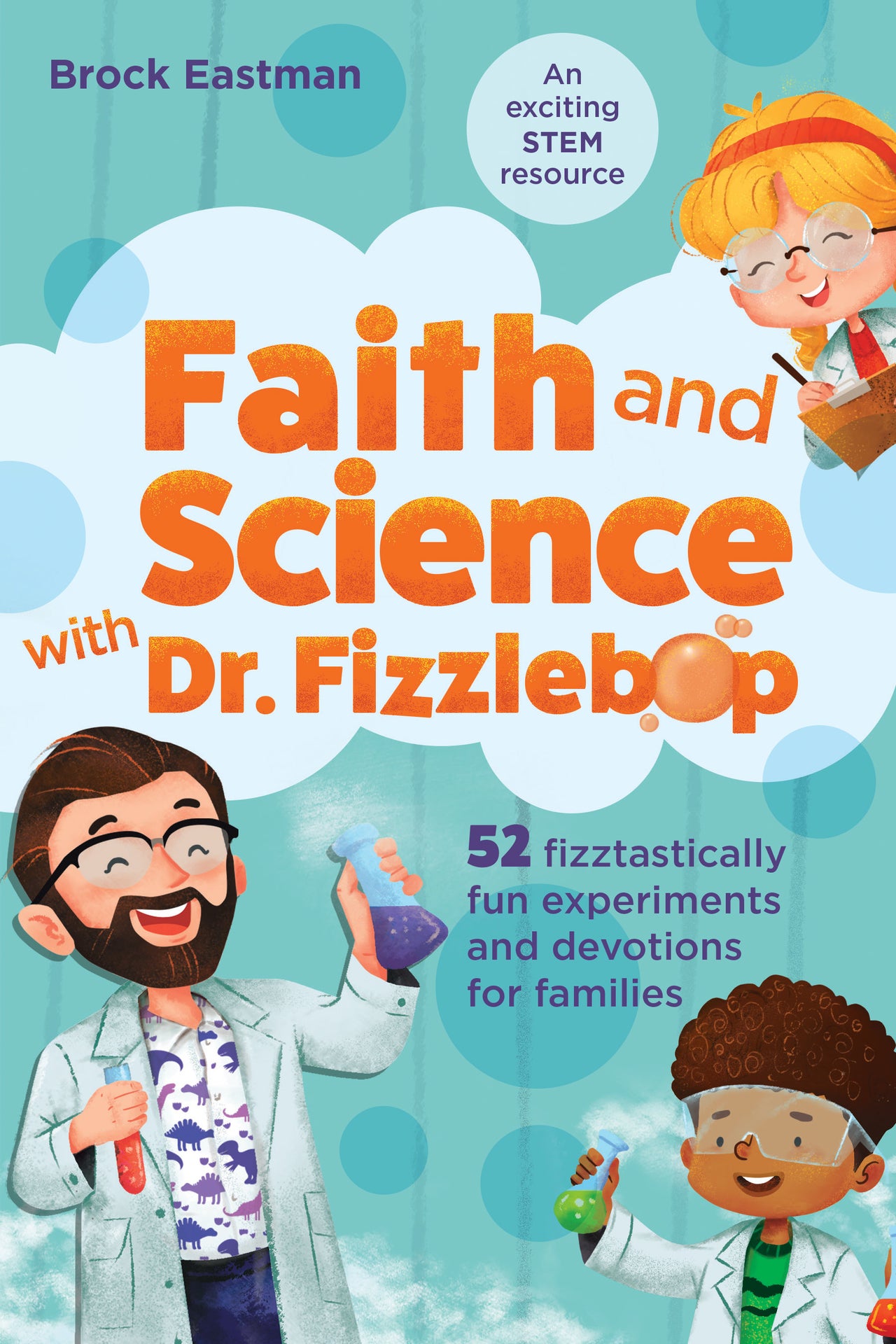
    Faith and Science with Dr. Fizzlebop: 52 Fizztastically Fun Experiments and Devotions for Families

    $15.99
    Add to Cart

    Archives

    June 2025
    May 2025
    April 2025
    March 2025
    December 2023
    November 2023
    September 2023
    August 2023
    July 2023
    February 2022
    January 2022
    December 2021
    November 2021
    October 2021
    September 2021
    August 2021
    February 2021

    Categories

    All
    Advent
    Artwork
    Black History Month
    Book Release
    Christmas
    Craft
    Devotional
    Devotions
    Easter
    Experiment
    Facts And Faith
    Faith And Science
    Father's Day
    Fizzlebop
    Fizzlebop Labs
    History
    Holiday
    May Day
    Media
    Moon
    Mother's Day
    Pi Day
    Podcasts
    Rainbow
    Scientists
    Space
    STEAM
    STEM
    St. Patrick's Day
    Summer
    Thanksgiviing
    Turkey
    Valentine's Day
    Weather

    RSS Feed

Services

Speaking
Publishing

Company

About

Support

Contact
FAQ
Terms of Use
© COPYRIGHT 2021. ALL RIGHTS RESERVED.
  • Home
    • Imagination Exploration News
    • eNews Signup
    • Imagination Explorers
    • Rate & Review Challenge
    • Welcome
  • Store
  • Fizzlebop
    • Dr. Fizzlebop
    • Fizzlebop Books
    • Fizzlebop Videos
    • Fizz Extras >
      • Fizzlebop Straw Rocket
    • Fizzlebop Lab Updates
  • Books & Writing
    • Middle Grade & Young Adult Books >
      • Parable Port >
        • Penguincast with J.R.
      • The Quest for Truth >
        • TQ4T Books
        • Questers
        • #TQ4T
        • Glossary
        • Resources & Activities
      • Sages of Darkness >
        • Sage Books
        • Hunters
        • #FightaDemon
      • Kingdoms of Color
      • Crimson Pulse Media
    • Picture & Board Books >
      • Bedtime on Noah's Ark >
        • Bedtime on Noah's Ark
        • Bedtime on Noah's Ark Activities
      • Little Lion Books >
        • Little Lion
        • Daddy's Favorite Sound
        • Mommy's Favorite Smell
        • Little Lion Activities
      • Afraid of the Light
      • Hippopolis >
        • Hippopolis
        • Hippo Activities
      • Saint Nicking at Night
      • Obby the Obot
    • Devotionals & Bibles >
      • Faith and Science with Dr. Fizzlebop
      • Edge of the Galaxy
      • Key Verse Challenge (Go Bible)
      • Go Bible
      • The Action Bible: Faith in Action Edition
    • Early Reader Books >
      • Imagination Station
    • Magazine Stories
  • Author & Speaking
    • Author
    • Speaking
    • Tyndale Summer Camp
    • Adventures in Odyssey
  • Parents & Teachers
    • Activities & Resources
    • Book Lists
    • Book Reviews & Interviews
  • Podcast